Six Islands Side by Side
| Island | Waters | Character | Main ferry link | Best for |
|---|---|---|---|---|
| Bornholm | Baltic | Granite cliffs, round churches, smokehouses | Ystad–Rønne, Køge–Rønne | Cyclists, hikers, families |
| Ærø | South Funen Archipelago | Preserved towns, beach huts | Svendborg, Faaborg, Fynshav | Families, sailors |
| Fanø | Wadden Sea | Wide sand beaches, thatched villages | Esbjerg–Nordby, about 12 minutes | Families, kite fliers |
| Møn | Baltic | Chalk cliffs, dark skies | Road bridges | Walkers, stargazers |
| Samsø | Kattegat | Farmland, renewable energy | Hou–Sælvig, Kalundborg–Ballen | Cyclists |
| Læsø | Kattegat | Salt works, seaweed-thatched houses | Frederikshavn–Vesterø | Slow travellers |
Bornholm: The Granite Exception
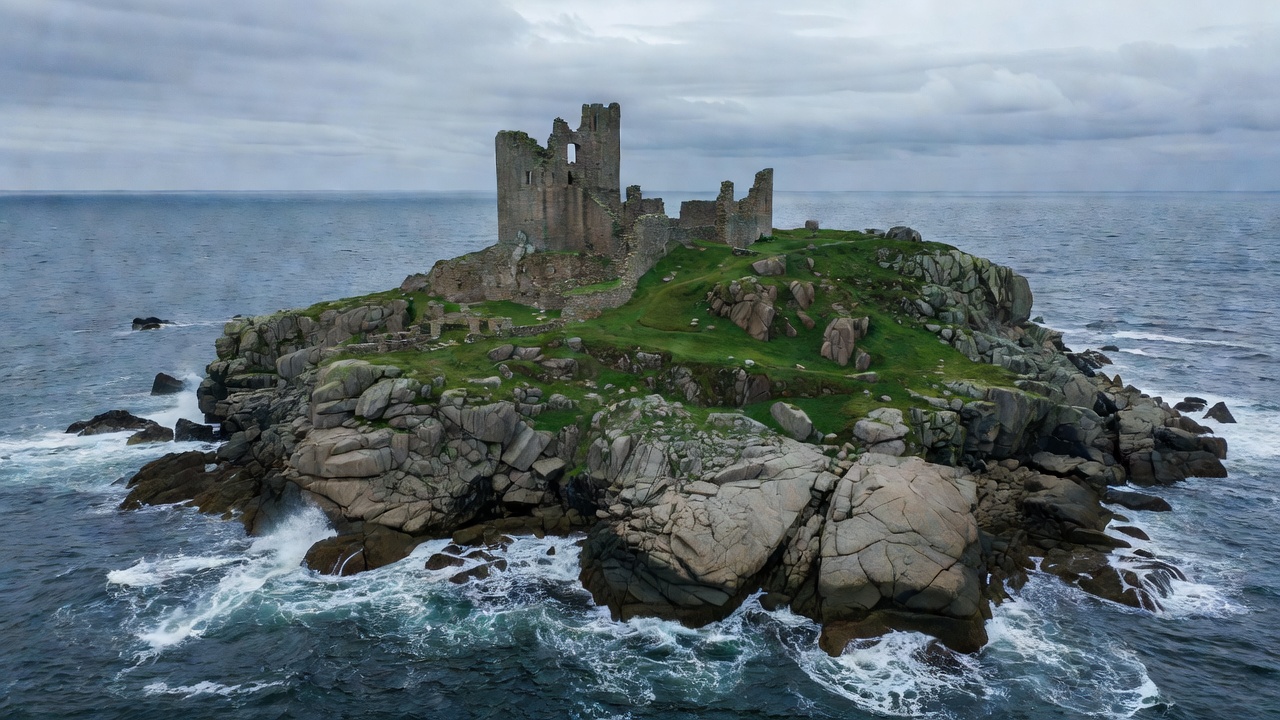
Bornholm lies in the Baltic far east of the rest of Denmark, closer to Sweden than to Copenhagen. Its geology is Scandinavian rather than Danish: granite headlands in the north, white sand at Dueodde in the south. Hammershus, a 13th-century fortress ruin on a cliff above the sea, is the largest medieval castle ruin in Northern Europe.
The island has four medieval round churches, at Østerlars, Olsker, Nylars and Nyker, built with thick walls that also served as refuges. Gudhjem and Svaneke are the classic harbour towns, known for their chimney-topped smokehouses producing smoked herring. Bornholm has an extensive network of signed cycle routes, and the coastal path circles most of the island.
The quickest route from Copenhagen is train or bus to Ystad in Sweden, then the fast ferry to Rønne in around 80 minutes. A conventional ferry also runs from Køge. Ertholmene, the tiny Christiansø and Frederiksø group, lies about 18 km to the northeast and is reached by boat from Gudhjem and Svaneke.
Ærø: The Archipelago Island
Ærø sits at the southern edge of the South Funen Archipelago. Ærøskøbing is one of Denmark's best-preserved 18th-century market towns, with cobbled lanes and half-timbered houses. Marstal, at the eastern end, built its wealth on shipping, and its maritime museum tells that story. Near Ærøskøbing, a row of small painted beach huts has become the island's best-known image.
Ferries run from Svendborg and Faaborg on Funen and from Fynshav on Als. The all-electric ferry Ellen serves the Søby route. The island is small enough to cycle end to end in a day, and its sheltered harbours make it a staple for sailors in the archipelago.
Fanø, Møn, Samsø and Læsø
Fanø lies in the Danish Wadden Sea, part of a World Heritage Site shared with Germany and the Netherlands. Its west coast is one long sand beach, firm enough for driving in places, and Sønderho is a village of thatched captains' houses. The island hosts a well-known international kite festival.
Møn is famous for Møns Klint, white chalk cliffs rising about 128 m above the Baltic. Møn and neighbouring areas form a UNESCO biosphere reserve, and the island is recognised for its dark night skies.
Samsø in the Kattegat became widely known for achieving energy self-sufficiency through wind and other renewables. It is flat, rural and ideal by bike.
Læsø has a long history of salt making and a few surviving houses roofed with seaweed, a building tradition found almost nowhere else.
Who Each Island Suits
- Families: Fanø and Dueodde on Bornholm for shallow sandy beaches; Ærø for short distances.
- Sailors: the South Funen Archipelago around Ærø, with short legs between harbours.
- Hikers: Bornholm's north coast and Møns Klint's cliff-top paths and stairs.
Island Fact Blocks
Can I camp anywhere in Denmark?
No. Denmark has no general right to camp wild. Use campsites or designated primitive sites in forests and on some islands.
What is Sankt Hans?
Midsummer Eve on 23 June, marked with beach bonfires across Denmark.